
SCIENCE with BOOGERS! Preparing and Examining Boogers Under the Microscope
Reconstructed for the archive — this video never had a written companion, so I wrote one from the original footage with my own custom AI tools and a little good old-fashioned tweaking for accuracy.
As promised in an earlier episode, today we dedicate a whole episode to boogers. We prep a properly disgusting slide and run it up through 40x, 100x, 400x, and 1000x.
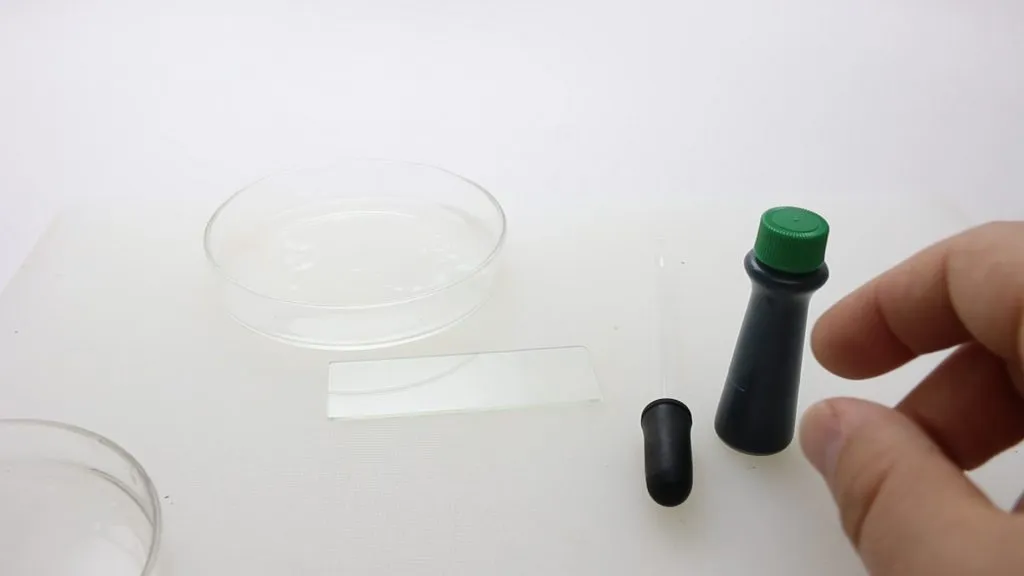
What you’ll need
To conduct this experiment you’ll need a microscope, a slide, a slide cover, green food coloring, and ideally an eye dropper and a petri dish — though you could probably manage with any container and a booger-moving device of your choosing.
Prepping the slide
First you need to source a nice, juicy booger. There are various methods for booger retrieval, which — out of respect for the specimen — I won’t detail here, but feel free to submit your own recommendations in the comments section :D.
Once you have your boogers, place a dignified glob of them on the slide.
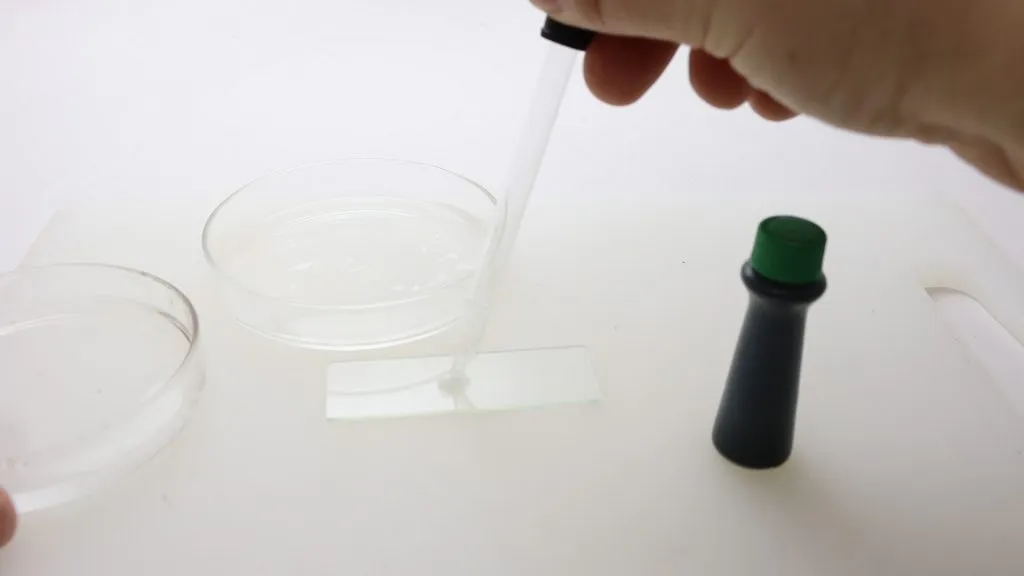
With the booger seated on the slide, it’s time for the food coloring. A single drop is more than enough — this is science, not a paint job.
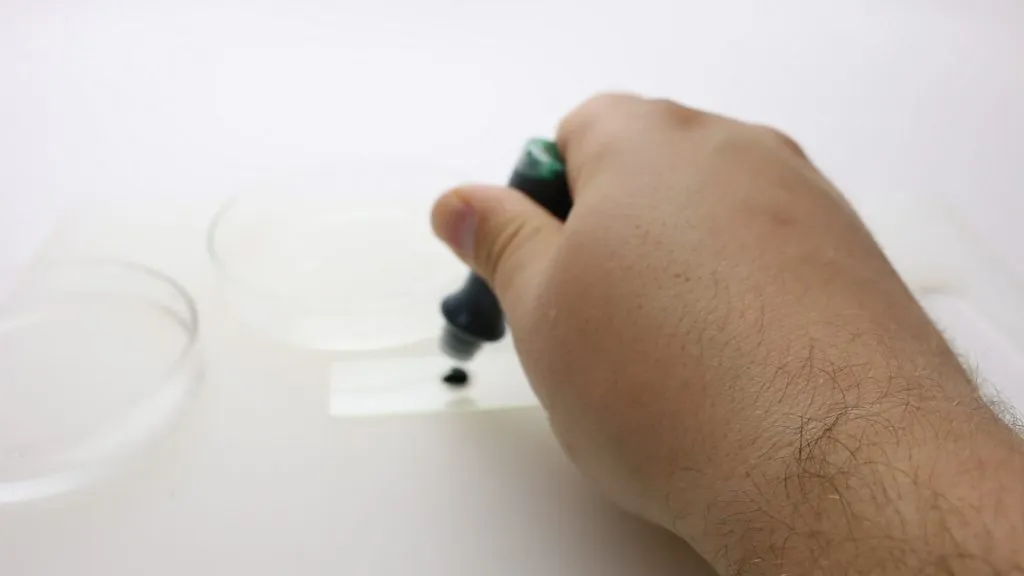
We used green, because — well, it was boogers, okay. Next comes the slide cover, lowered onto the goober.
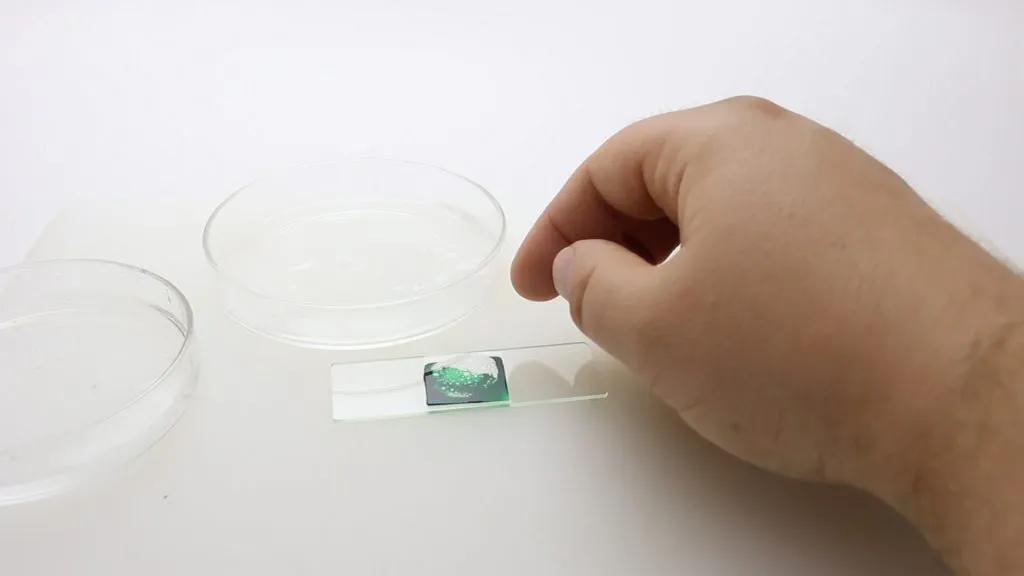
At this point there is far too much dye and frankly an unprofessional quantity of booger, and the whole slide wiggles around like it has somewhere better to be — impossible to look at under any real magnification.
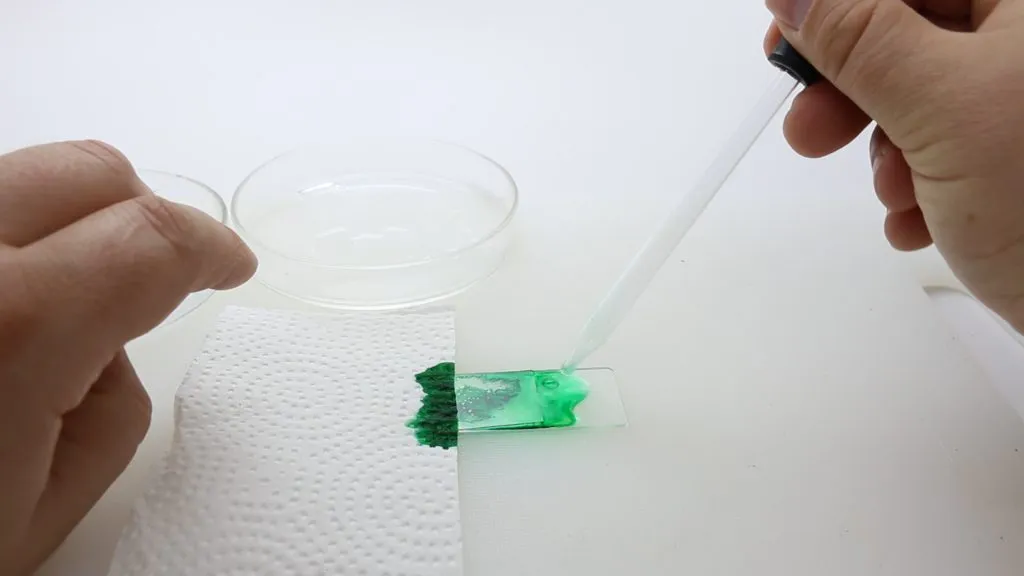
To fix that, we hold a paper towel to one side and add water on the other, which wicks out the excess food coloring and lets the slide sit more flush. You’ll probably need to press down on the slide cover lightly to squeeze enough of the surplus booger out so the cover stops riding around freely on top of it.
After that, immersion oil: a single drop, spread evenly over the top of the slide.
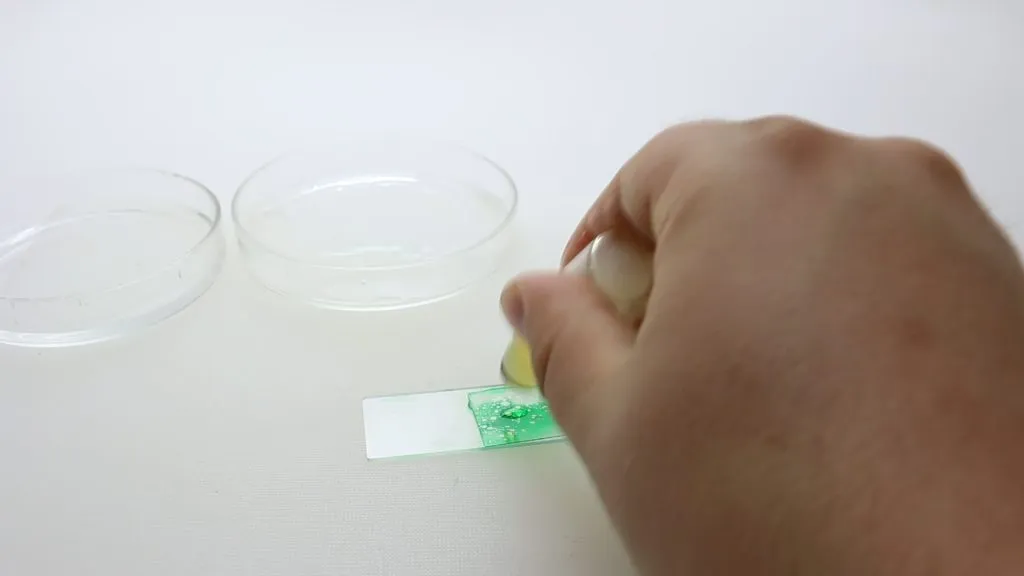
Here’s what it looks like once the oil’s spread out.
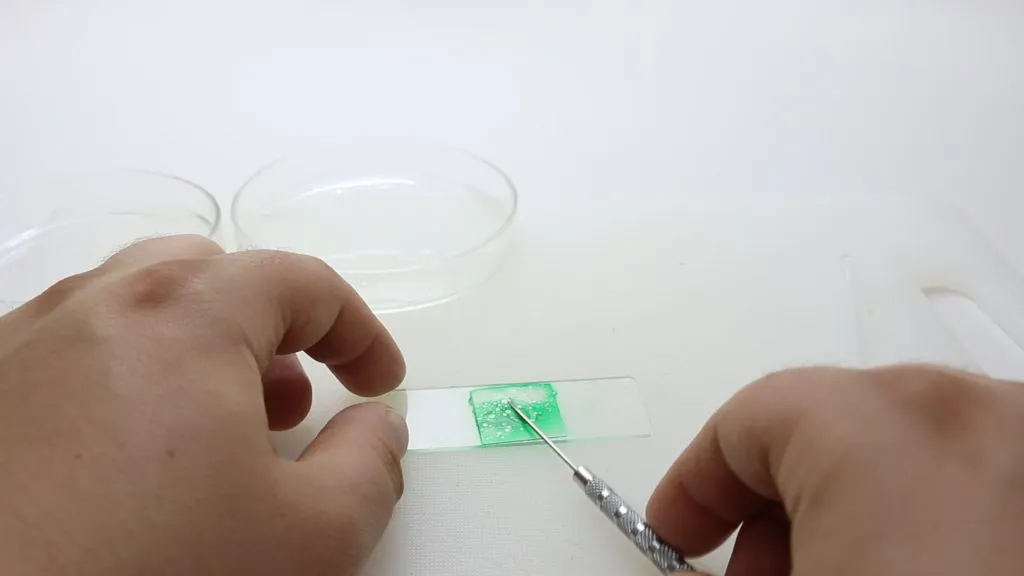
Under the scope
Finally you’re ready to put the slide under the scope and see what’s actually there. My son had been stalling this episode for the better part of a week — the kid who begs to inspect everything else under a microscope draws a firm, principled line at his own boogers — and once we got there, the payoff was almost insulting: mostly indistinct floating specks, one maybe-bubble, and not a single thing that reads as a “creature” at any of the four magnifications.
That’s not actually a letdown, science-wise. Mucus is mostly water and a tangle of mucin proteins doing the honest work of trapping whatever you breathed in, so what you’re looking at under a hobby scope is debris suspended in gel, not a zoo. Individual bacteria sit right at the resolution limit of a scope like ours anyway, and without a stain they’re basically transparent — so “boring” doesn’t mean “no germs,” it just means you can’t see them at this scale. I claimed I must just be very healthy; more accurately, our scope wasn’t good enough to see them.
If you found something cooler in your own boogers, share it in the comments or as a video response to our channel — I’d genuinely like to be out-grossed.
I'm Joseph Dattilo — engineer-founder in Lansing, Michigan, author of the FleetHarbor suite, and founder of Date Palm Media. More about me · More writing · Get in touch